
What a Dedicated API Team Actually Looks Like
The most common API failure mode is not bad code on day one. It is the absence of anyone accountable when something outside your control changes. Third-party APIs update without warning. Rate limits shift. Authentication flows change. A contractor who finished the integration six months ago cannot help you when the platform they integrated against releases a breaking update.
CoreVisionDev gives you a complete unit. Your team has a project manager who owns communication and sprint planning, a senior team lead who owns API architecture and integration design, and senior developers who build across internal API development and third-party integration work. Daily standups keep you informed on what is in progress. Bi-weekly demos show you working, tested integrations, not architecture documents.
The monthly retainer covers this entire team. In most Western markets, that is less than the fully-loaded cost of one senior backend developer hired in-house, without the recruitment timeline, the onboarding period, or the institutional knowledge that walks out when they leave.
What Our API Developers Build
REST API design and architecture
Clean, well-documented REST APIs built with scalability and maintainability as the starting point. Versioning, authentication, rate limiting, and error handling are part of the initial design, not retrofitted later when something breaks under load.
Third-party API integration
Our team has built integrations across property management software, NFC hardware, government data systems, headless CMS platforms, nutritional databases, and athlete recruitment systems. We handle authentication flows, data mapping, error handling, and retry logic for every integration we build.
Headless CMS and content API architecture
API-first content architectures using Directus and similar platforms. Content served through APIs without coupling update workflows to application deployment cycles, which keeps large content volumes manageable without touching the core codebase.
API performance and reliability
Response time monitoring, query optimisation, caching strategies, and rate limit management built into the ongoing work cycle. A slow API is not an inevitability.
API documentation and versioning
Clear, maintained API documentation and versioning practices that mean your team, your partners, and your integrations do not break when the API evolves.
Webhook and event-driven integrations
Real-time event handling for products that need to respond to external system changes immediately, from access control triggers to payment confirmations to data sync events.
API Integrations We Have Built
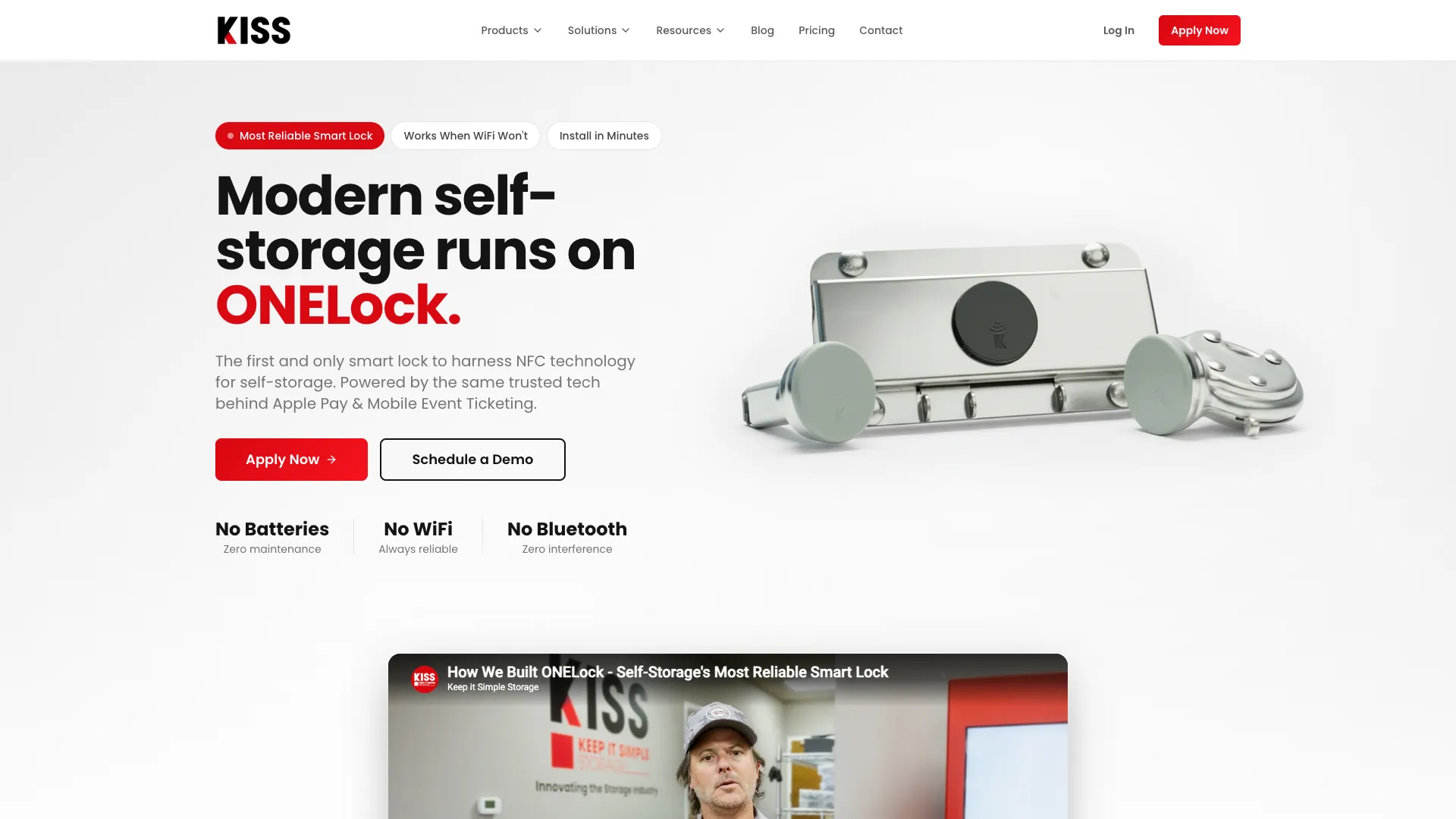
KISS: NFC Hardware and Property Management API Integration
PropTech / Access Control Automation
The problem
Self-storage operators needed a platform where software controlled physical NFC smart locks in real time, and where that control layer stayed synchronised with existing property management software across multiple facilities. The API layer had to handle access permission changes, move-in and move-out triggers, delinquency overlocking, and operator notifications without any manual intervention or on-site staff.
What we built
We built and scaled the API layer on AWS and DigitalOcean, integrating directly with major property management platforms through REST APIs and communicating with NFC hardware to control physical lock access. Automated workflows fire through the API in response to tenant status changes, delinquency triggers, and access permission updates. The integration handles real-time state synchronisation between the software dashboard and the physical locks across every facility in an operator's portfolio.
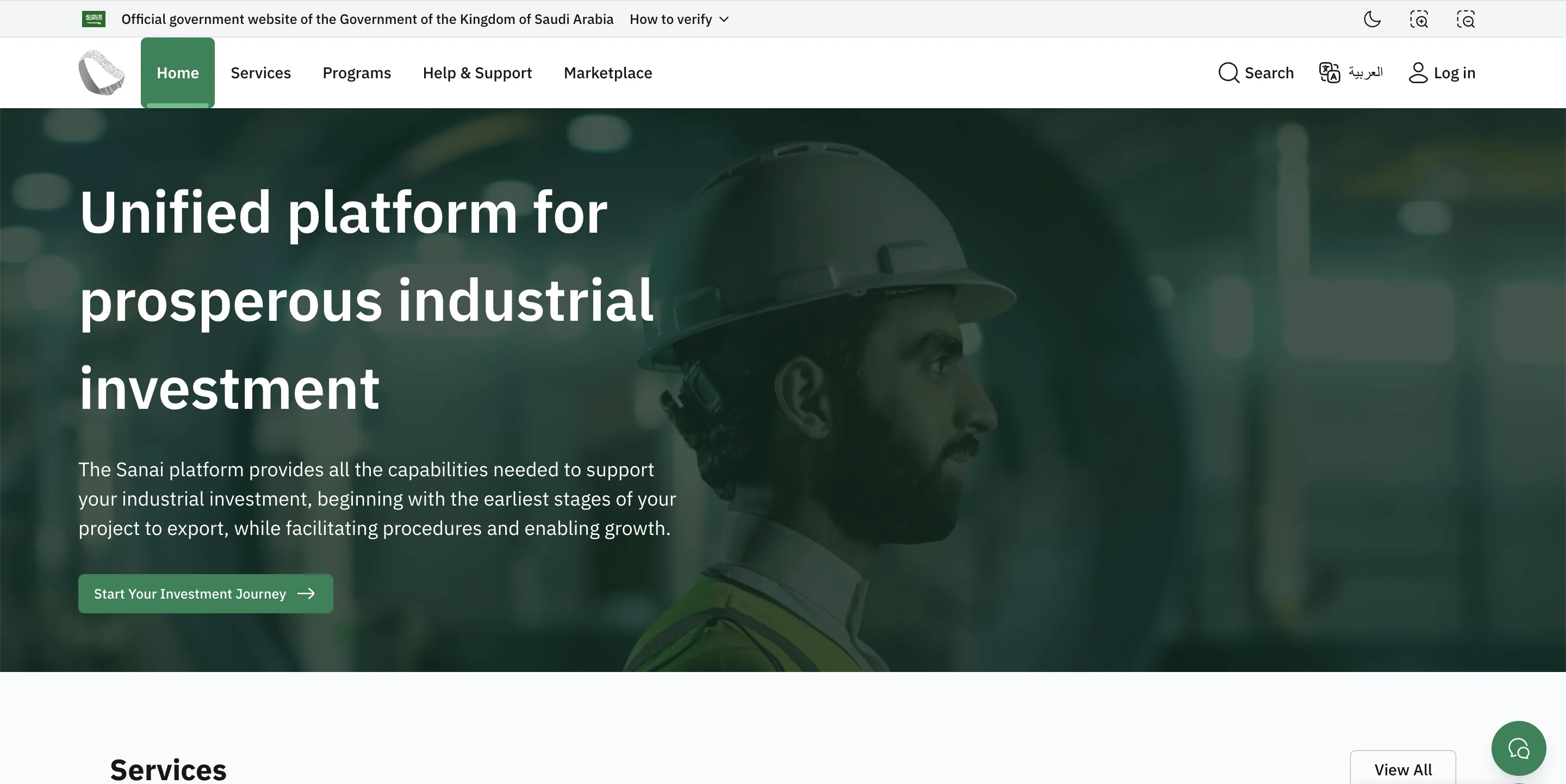
Senaei: Government Data and Headless CMS API Architecture
GovTech / Digital Government
The problem
The Saudi Ministry of Industry needed an API architecture that could serve high volumes of government content to a national-scale platform without coupling content updates to the application deployment cycle. The system had to handle simultaneous Arabic and English content correctly, keep the core application database focused on transactional data, and allow government administrators to update content through a CMS without touching the application.
What we built
We architected a headless CMS solution using Directus, with all government content served through APIs to the React frontend. The API layer separates content management entirely from the application database, routes content requests through Directus, and handles bilingual content correctly for both RTL Arabic and LTR English rendering. Internal back-office tools for administrators connect to the same API layer through Filament.

EXACT Sports: NCAA Recruitment and Athlete Data API Integration
SportsTech / Athlete Development
The problem
Sports organisations needed an API layer that could manage athlete profiles, training data, behavioural assessments, event registrations, and NCAA recruitment workflows in one system, serving different data to athletes, coaches, and administrators based on role, and connecting athlete profiles to hundreds of NCAA programs through external recruitment API integrations.
What we built
We contributed to building and improving the platform API layer, handling multi-role data access, athlete assessment data processing, event management workflows, and the external API connections that link athlete profiles to NCAA recruitment systems. The API serves different data sets to different user roles from the same underlying data model without duplicating records or creating inconsistencies between views.
How the Process Works
Free strategy call
You tell us about your product, your current API architecture, and which integrations are causing problems or missing entirely. We ask the questions that matter and hand-pick API developers who fit your specific stack and integration requirements.
3-month roadmap
Before any code gets written, we define which APIs get built, which integrations get implemented, and what the deliverables look like for the first three months. You know exactly what you are getting and when.
Sprints, daily standups, continuous builds
Developers build in sprints. Daily standups keep you informed. Nothing ships without your visibility into what changed and why.
Bi-weekly demos and continuous deployment
Every two weeks you see real, working integrations in the deployed environment. Feedback goes in immediately. There is no waiting for a final version.
Launch and ongoing management
Your integrations go live. We stay embedded. API monitoring, third-party change management, bug fixes, and iteration continue as part of the normal work cycle.
How does sprint-based API development work?
Sprint-based API development means work is planned and delivered in fixed cycles, typically one to two weeks. At the start of each sprint, the team defines which endpoints get built, which third-party integrations get implemented, and which reliability or performance issues get resolved. Developers build during the sprint with daily standups tracking progress. At the end of each sprint, working integrations are demonstrated in the deployed environment and shipped. Feedback goes directly into the next sprint. This gives founders full visibility at every stage and eliminates the common failure mode of API integration work that gets delivered without ongoing ownership of what happens when external systems change.
CoreVisionDev vs Hiring In-House or Using Freelancers
| Feature | CoreVisionDev | In-house | Freelancers |
|---|---|---|---|
| Time to start | 5 days | 3 to 6 months | 1 to 4 weeks |
| Vetting and quality guarantee | |||
| Dedicated project manager | |||
| Replacement guarantee | |||
| Third-party integration track record | Depends | Depends | |
| Ongoing integration maintenance | |||
| Third-party API change management | |||
| NDA protection | Partial | ||
| Full code ownership | Variable |
Hiring in-house costs three to six months of recruitment time plus full-time salaries, benefits, and equipment. If that developer leaves, the institutional knowledge of your API layer and integration logic leaves with them. A freelance platform gives you a contractor who builds the integration and moves on, with no one accountable when the third-party API changes six months later. CoreVisionDev gives you a managed team on a monthly retainer, accountable for the integrations they built, available when external systems change, replaceable at no cost if the fit is wrong, and embedded from day one through ongoing management.
On every specific point in that comparison: CoreVisionDev gets a team inside your product in 5 days versus three to six months for in-house. Every developer is pre-vetted with a quality guarantee. You get a dedicated project manager included. If a developer is wrong for your product, CoreVisionDev replaces them at no cost. Third-party integration experience across NFC hardware, government systems, property management platforms, and recruitment APIs is a documented track record at CoreVisionDev, not a claim. Ongoing integration maintenance and third-party API change management are part of the retainer, which neither an in-house hire nor a freelance contractor provides as standard. NDA protection is in place before any work begins. Full code ownership transfers to you on everything built.
Who This Works For
CoreVisionDev is the right choice if you are:
- A product that connects to one or more external systems and needs those integrations built reliably and maintained continuously
- A founder whose current API layer is slow, poorly documented, or breaking whenever a third-party platform updates
- A startup building on top of hardware, government data, or complex external platforms that require integration experience beyond standard payment or CMS connections
- A company that needs ongoing API management after launch, not a one-time integration build with no support when something changes
CoreVisionDev is not the right fit if you are:
- Looking for the cheapest option available. We do not compete on price.
- Building a product with no external API dependencies or integration requirements
- Looking to make every architecture decision yourself without a technical partner
Quality Standards
Every API endpoint and integration is reviewed by a senior team lead before it ships. Testing covers endpoint functionality, authentication flows, error handling, and integration reliability with external systems. Response times and error rates are monitored as part of the ongoing retainer. Third-party API changes are tracked and handled proactively where possible. AI tools are part of how we work, but a developer reviews every output before it gets committed. If a developer is not the right fit for your product, we replace them at no cost. We sign an NDA before any work begins and full code ownership transfers to you.