
What a Dedicated Frontend Team Actually Looks Like
Hiring a single frontend developer usually means one person juggling component architecture, performance optimisation, cross-browser compatibility, and responsive design at the same time. When one of those things slips, the rest follow.
CoreVisionDev gives you a complete unit. Your team has a project manager who owns communication and sprint planning, a senior team lead who owns component architecture and code quality, and senior frontend developers who build and iterate across every layer of the interface. Daily standups keep you informed on what is in progress. Bi-weekly demos show you working interfaces, not Figma screens.
The monthly retainer covers this entire team. In most Western markets, that is less than the salary cost of one mid-level frontend developer hired in-house, without the recruitment timeline, benefits overhead, or the risk of starting over when they leave.
What Our Frontend Developers Build
Component architecture
Reusable, well-structured component libraries in React, Vue.js, and modern JavaScript. Built to scale as your product grows, not rebuilt every time a new feature ships.
Responsive and mobile-first interfaces
Layouts that work across every screen size from the start. Mobile is not an afterthought in how we build.
Performance and Core Web Vitals
Loading speed, Largest Contentful Paint, Cumulative Layout Shift, and Interaction to Next Paint are part of every sprint review. Slow interfaces cost you users and search rankings.
Design-to-code implementation
We work directly from Figma and other design files, translating them into precise, pixel-consistent interfaces without back-and-forth interpretation errors.
Multilingual and RTL interfaces
Our team has native capability in English, Arabic, French, and German. For Arabic-language markets, that includes proper right-to-left layout architecture, not just text replacement on an existing LTR interface.
Accessibility
WCAG compliance built into components from the start, not added as a patch before a compliance review.
Interfaces We Have Built
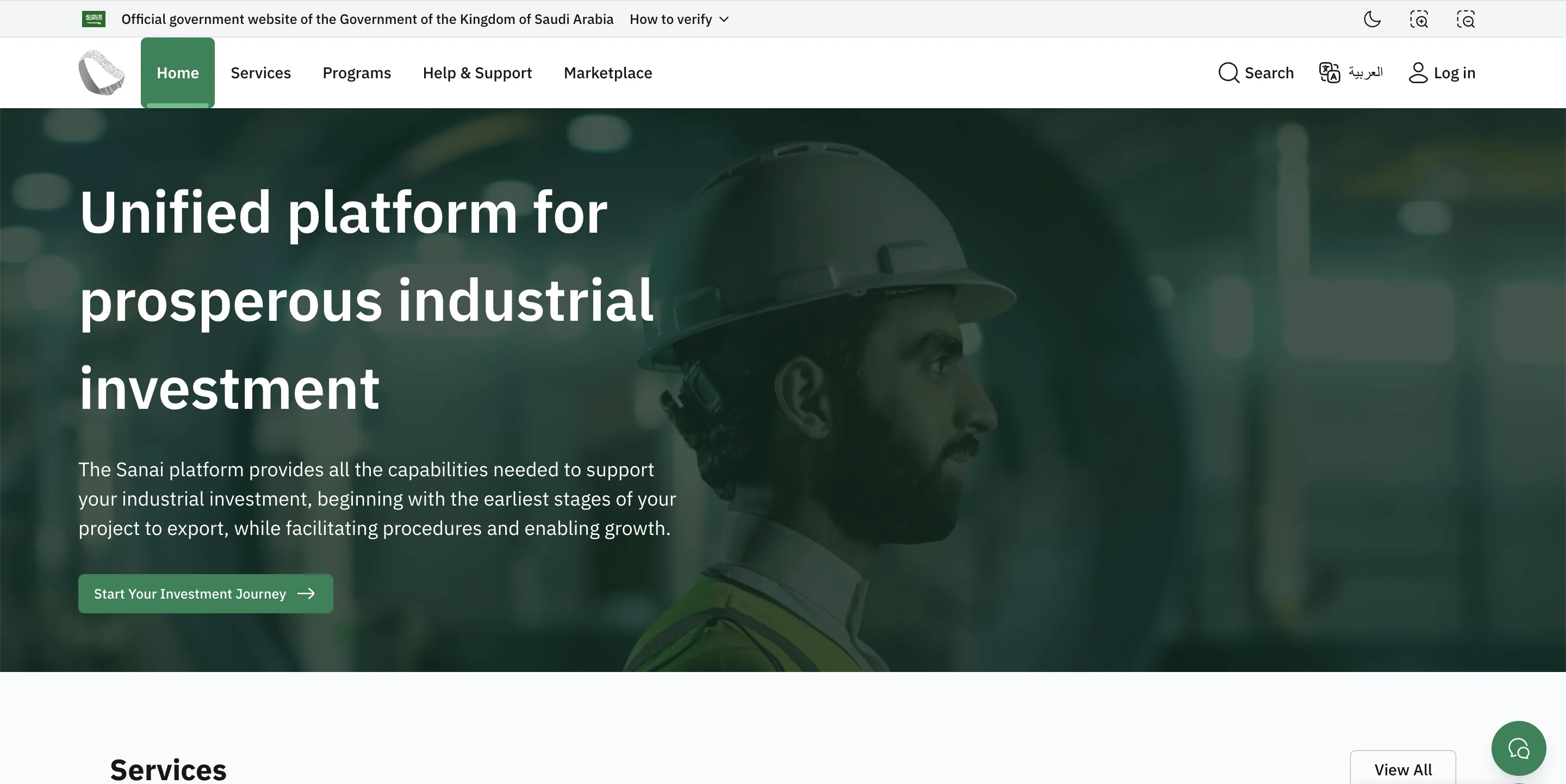
Senaei: National Industrial Investment Platform, Saudi Arabia
GovTech / Digital Government
The problem
The Saudi Ministry of Industry needed a public-facing platform that could handle the full industrial investment journey: investor discovery, application submission, and regulatory document management, at national scale, in Arabic and English simultaneously.
What we built
We built the public-facing frontend using React, Livewire, and TailwindCSS. The interface handles high content volumes served through a headless CMS via Directus APIs, renders correctly in both RTL Arabic and LTR English, and stays fast under national-level traffic.
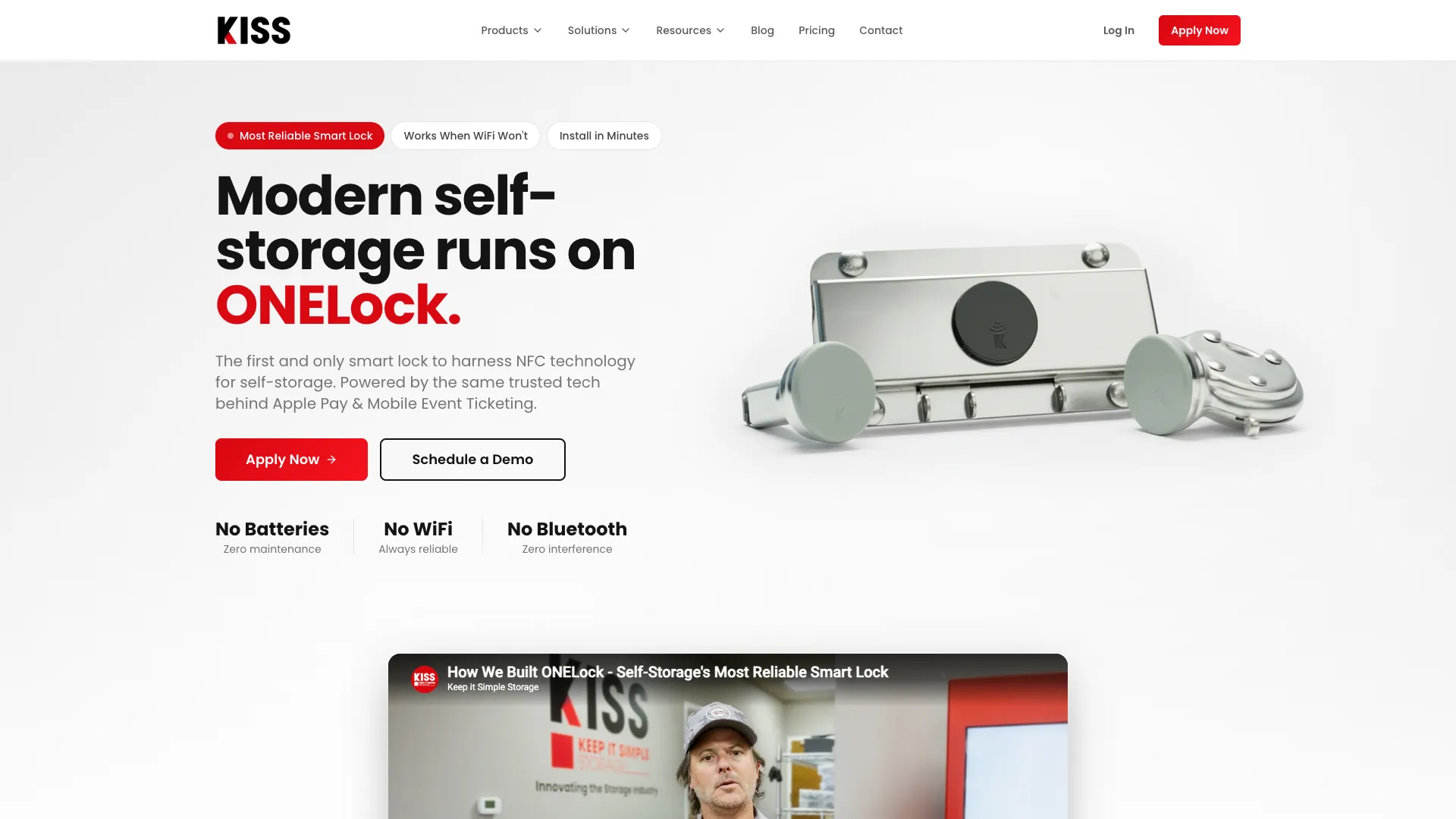
KISS: Remote Self-Storage Management Dashboard
PropTech / Access Control Automation
The problem
Storage facility operators needed a dashboard that let them manage multiple facilities remotely from a single interface. The frontend had to surface real-time data from NFC locks and property management integrations, stay responsive on mobile for operators in the field, and handle the access management workflow without requiring on-site staff.
What we built
We built the operator dashboard in Vue.js with a real-time data layer connected to property management software and NFC lock integrations. The interface surfaces move-in and move-out status, access permissions, and delinquency flags across every facility in the operator's portfolio.
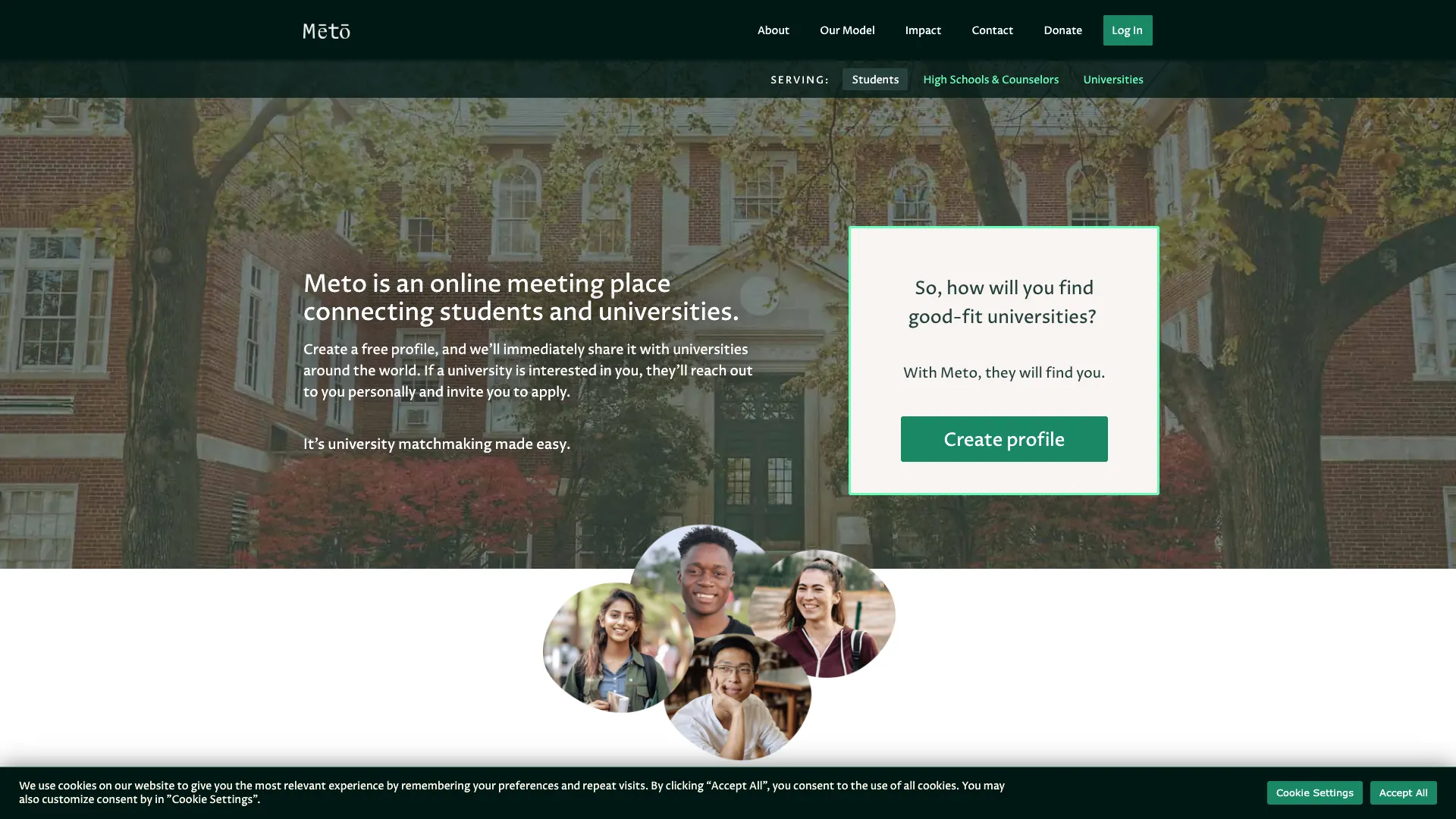
Meto: Global Student-to-University Discovery Platform
EdTech / Higher Education
The problem
International students from developing regions had no structured way to discover universities that matched their academic and financial profile. The interface needed to present complex student and institutional data clearly, work across devices for users in low-bandwidth regions, and support the full recruitment workflow for counselors and universities from a single screen.
What we built
We built the frontend with a responsive, component-driven architecture in Laravel, TailwindCSS, and Livewire. Student profiles, university discovery tools, and counselor dashboards are all rendered dynamically without full page reloads. The interface handles the full discovery and communication workflow for students, institutions, and counselors in one coherent system.
How the Process Works
Free strategy call
You tell us about your product, your interface problems, and where things currently stand. We ask the questions that matter and hand-pick frontend developers who fit your specific stack and product requirements.
3-month roadmap
Before any code gets written, we define priorities, component milestones, and deliverables for the first three months. You know exactly what you are getting and when.
Sprints, daily standups, continuous builds
Developers build in sprints. Daily standups keep you informed. Nothing ships without your visibility into what changed and why.
Bi-weekly demos and continuous deployment
Every two weeks you see real, working interface updates. Feedback goes in immediately. There is no waiting for a final version.
Launch and ongoing management
Your product goes live. We stay embedded. Performance monitoring, bug fixes, and iteration continue as part of the normal work cycle.
How does sprint-based frontend development work?
Sprint-based development means work is planned and delivered in fixed cycles, typically one to two weeks. At the start of each sprint, the team defines what will be built: which components, which performance fixes, which interface updates. Developers build during the sprint with daily standups tracking progress. At the end of each sprint, working interfaces are demonstrated in the deployed environment and shipped continuously. Feedback from the demo goes directly into the next sprint. This gives founders full visibility at every stage and eliminates the risk of months of hidden work that does not match expectations when it finally surfaces.
CoreVisionDev vs Hiring In-House or Using Freelancers
| Feature | CoreVisionDev | In-house | Freelancers |
|---|---|---|---|
| Time to start | 5 days | 3 to 6 months | 1 to 4 weeks |
| Vetting and quality guarantee | |||
| Dedicated project manager | |||
| Replacement guarantee | |||
| Performance and Core Web Vitals ownership | Depends | Depends | |
| RTL and multilingual capability | Rare | Rare | |
| Ongoing management after launch | |||
| NDA protection | Partial | ||
| Full code ownership | Variable |
Hiring in-house costs three to six months of recruitment time plus full-time salaries, benefits, and equipment. With frontend developer tenure averaging under two years in most markets, you may be restarting that process sooner than you expect. A freelance platform gives you one contractor managing themselves with no continuity guarantee if they become unavailable. CoreVisionDev gives you a managed team on a monthly retainer, accountable for the interface they built, replaceable at no cost if the fit is wrong, and embedded from day one through ongoing management.
On every specific point in that comparison: CoreVisionDev gets a team inside your product in 5 days versus three to six months for in-house and one to four weeks for a freelance hire. Every developer is pre-vetted with a quality guarantee, which neither in-house recruitment nor freelance platforms provide as standard. You get a dedicated project manager included, which you do not get with in-house developers or freelancers. If a developer is wrong for your product, CoreVisionDev replaces them at no cost. Performance and Core Web Vitals ownership is built into every sprint at CoreVisionDev rather than left to individual developer initiative. RTL and multilingual frontend capability is native to CoreVisionDev and rare through either alternative. NDA protection is in place before any work begins. Full code ownership transfers to you on everything built.
Who This Works For
CoreVisionDev is the right choice if you are:
- A startup that needs a fast, polished interface shipped without the overhead of hiring a frontend team in-house
- A founder whose current interface is slow, inconsistent, or breaking on certain devices and needs someone to own fixing it
- A product expanding into Arabic, French, or German markets that requires proper multilingual and RTL frontend architecture
- A company that needs ongoing frontend iteration after launch, not a one-time build that no one maintains
CoreVisionDev is not the right fit if you are:
- Looking for the cheapest option available. We do not compete on price.
- Building a simple static site with no ongoing development needs
- Looking to micromanage every component decision yourself without a technical partner
Quality Standards
Every component is reviewed by a senior team lead before it ships. QA testing runs on every sprint delivery across browsers, devices, and mobile. Performance metrics are checked against Core Web Vitals targets on every release. Accessibility compliance is part of the component build process, not a separate audit. AI tools are part of how we work, but a developer reviews every output before it gets committed. If a developer is not the right fit for your product, we replace them at no cost. We sign an NDA before any work begins and full code ownership transfers to you.