
What a Dedicated Backend Team Actually Looks Like
Hiring a backend developer as a solo contractor usually means one person covering architecture decisions, database design, API development, third-party integrations, and server infrastructure all at once. When the scope grows, the cracks appear.
CoreVisionDev gives you a complete unit. Your team has a project manager who owns communication and sprint planning, a senior team lead who owns architecture decisions and code quality, and senior backend developers who build and maintain across every layer of your server-side product. Daily standups keep you informed on what is in progress. Bi-weekly demos show you working systems, not architecture diagrams.
The monthly retainer covers this entire team. In most Western markets, that is less than the salary of one senior backend developer hired in-house, without the recruitment timeline, benefits overhead, or the months it takes before someone new is genuinely productive on your codebase.
What Our Backend Developers Build
API development and architecture
Clean, well-documented REST APIs built to last. We design endpoints with scalability in mind from the start, not refactored under pressure when traffic grows.
Database design and management
Schema design, query optimisation, and ongoing database maintenance across MySQL, PostgreSQL, and other relational systems. We treat the database as a long-term asset, not a one-time setup.
Third-party integrations
Our team has built integrations across payment processors, property management software, government data APIs, headless CMS platforms, NFC hardware systems, and external data feeds. If your product connects to something outside itself, we handle the integration reliably.
Server infrastructure and deployment
Backend deployment on AWS and DigitalOcean with environment configuration, performance monitoring, and proactive issue management built into the ongoing work cycle.
Business logic and automation
Complex workflow automation, background job processing, scheduled tasks, and the business rules that make your product do what it actually needs to do, not just return data.
Security and data integrity
Authentication systems, access control, input validation, and data protection practices built into every layer. Security is part of the architecture, not an afterthought.
Systems We Have Built
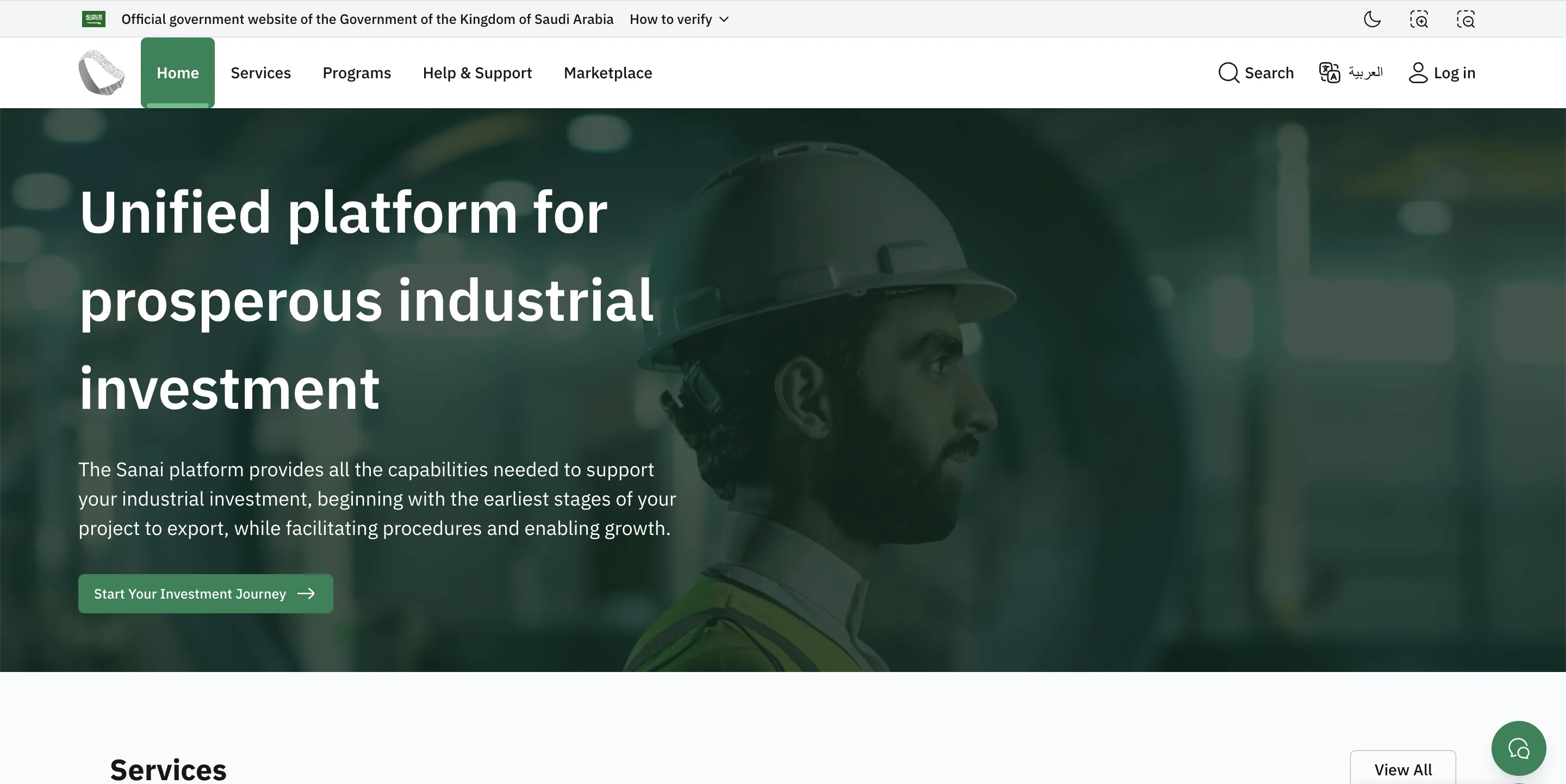
Senaei: National Industrial Investment Platform, Saudi Arabia
GovTech / Digital Government
The problem
The Saudi Ministry of Industry needed a backend that could handle the entire industrial investment workflow at national scale: investor applications, license management, regulatory document submissions, and content management, simultaneously in Arabic and English.
What we built
We built the full backend architecture using Laravel. The system separates concerns cleanly: a headless CMS on Directus manages high content volumes through APIs, keeping the core application database focused on critical transactional data. Filament powers the internal back-office tools used by government administrators. Livewire handles real-time user interactions without over-complicating the stack.
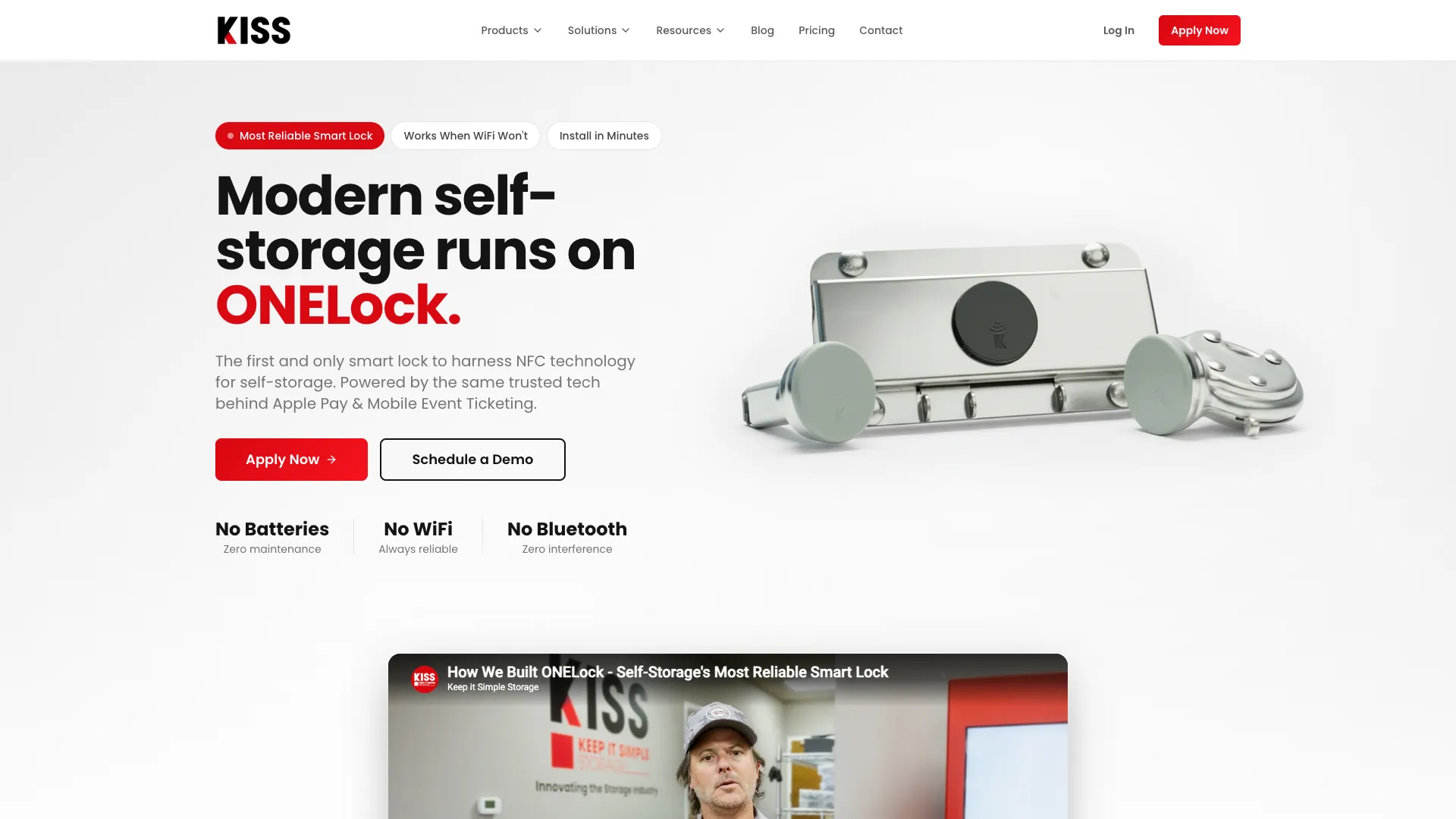
KISS: Remote Self-Storage Management Platform
PropTech / Access Control Automation
The problem
Self-storage operators needed a backend that could automate the full facility management lifecycle: move-ins, move-outs, access control, and delinquency overlocking, and integrate directly with NFC smart locks and existing property management software without requiring on-site staff.
What we built
We built and scaled the backend on AWS and DigitalOcean. The system integrates with major property management platforms through REST APIs and communicates with NFC hardware to control physical lock access. Automated workflows handle access permission changes, delinquency triggers, and operator notifications in real time without manual intervention.

EXACT Sports: Athlete Development and Recruitment Platform
SportsTech / Athlete Development
The problem
Sports organisations needed a backend that could manage athlete profiles, training resources, behavioural assessments, event management, and recruitment workflows in one system, serving both athletes and coaches with different data access levels and content types.
What we built
We contributed to building and improving the platform backend that handles the full athlete development lifecycle. The system manages user roles across athletes, coaches, and administrators, serves training content and assessment data, processes event registrations, and connects athletes with NCAA recruitment workflows through API integrations.
How the Process Works
Free strategy call
You tell us about your product, your backend architecture, and where things currently break or slow down. We ask the questions that matter and hand-pick backend developers who fit your specific stack and infrastructure requirements.
3-month roadmap
Before any code gets written, we define priorities, architecture decisions, and deliverables for the first three months. You know exactly what you are getting and when.
Sprints, daily standups, continuous builds
Developers build in sprints. Daily standups keep you informed. Nothing gets deployed without your visibility into what changed and why.
Bi-weekly demos and continuous deployment
Every two weeks you see real, working backend features. Feedback goes in immediately. There is no waiting for a final version.
Launch and ongoing management
Your product goes live. We stay embedded. Server monitoring, database maintenance, bug fixes, and iteration continue as part of the normal work cycle.
How does sprint-based backend development work?
Sprint-based development means work is planned and delivered in fixed cycles, typically one to two weeks. At the start of each sprint, the team defines what will be built: which API endpoints, which integrations, which database improvements, which bug fixes. Developers build during the sprint with daily standups tracking progress. At the end of each sprint, working features are demonstrated in the deployed environment and shipped continuously. Feedback from the demo goes directly into the next sprint. This gives founders full visibility at every stage and eliminates the risk of months of hidden backend work that does not match expectations when it finally surfaces.
CoreVisionDev vs Hiring In-House or Using Freelancers
| Feature | CoreVisionDev | In-house | Freelancers |
|---|---|---|---|
| Time to start | 5 days | 3 to 6 months | 1 to 4 weeks |
| Vetting and quality guarantee | |||
| Dedicated project manager | |||
| Replacement guarantee | |||
| Third-party integration experience | Depends | Depends | |
| Ongoing management after launch | |||
| Multilingual product capability | Rare | Rare | |
| NDA protection | Partial | ||
| Full code ownership | Variable |
Hiring in-house costs three to six months of recruitment time plus full-time salaries, benefits, and equipment. If that developer leaves, your codebase knowledge leaves with them and the timeline resets. A freelance platform gives you one contractor managing themselves with no continuity guarantee if they become unavailable. CoreVisionDev gives you a managed team on a monthly retainer, accountable for the system they built, replaceable at no cost if the fit is wrong, and embedded from day one through ongoing management.
On every specific point in that comparison: CoreVisionDev gets a team inside your product in 5 days versus three to six months for in-house and one to four weeks for a freelance hire. Every developer is pre-vetted with a quality guarantee, which neither in-house recruitment nor freelance platforms provide as standard. You get a dedicated project manager included, which you do not get with in-house developers or freelancers. If a developer is wrong for your product, CoreVisionDev replaces them at no cost. Third-party integration experience across payment systems, hardware, and government APIs is built into CoreVisionDev's track record and is highly variable through either alternative. Multilingual backend capability is native to CoreVisionDev and rare through either alternative. NDA protection is in place before any work begins. Full code ownership transfers to you on everything built.
Who This Works For
CoreVisionDev is the right choice if you are:
- A startup that needs a backend built to scale from the start, not one that needs to be rebuilt when traction arrives
- A founder whose current backend is slow, poorly documented, or too tightly coupled to change safely
- A product that connects to multiple external systems — payment processors, hardware, government APIs, third-party platforms — and needs someone who has done that before
- A company that needs ongoing backend management and iteration after launch, not a one-time build handed off with no support
CoreVisionDev is not the right fit if you are:
- Looking for the cheapest option available. We do not compete on price.
- Building a product with no server-side logic or API requirements
- Looking to make every architecture decision yourself without a technical partner
Quality Standards
Every piece of backend code is reviewed by a senior team lead before it ships. QA testing runs on every sprint delivery: API endpoint testing, database integrity checks, and integration testing with external systems. Security practices are applied at the authentication, data validation, and infrastructure level. AI tools are part of how we work, but a developer reviews every output before it gets committed. If a developer is not the right fit for your product, we replace them at no cost. We sign an NDA before any work begins and full code ownership transfers to you.